
Transcranial Magnetic Stimulation (TMS) Therapy at Psych Pointe
What is TMS?
Transcranial Magnetic Stimulation is a non-invasive, FDA-approved treatment that uses gentle magnetic pulses to stimulate targeted areas of the brain involved in mood and behavior regulation. TMS is most commonly used to treat Major Depressive Disorder and Obsessive-Compulsive Disorder, especially for individuals who have not found sufficient relief through medication or traditional therapy alone.
At Psych Pointe, we are proud to offer this advanced treatment option to help patients regain control of their mental health and improve their quality of life.
How TMS Works
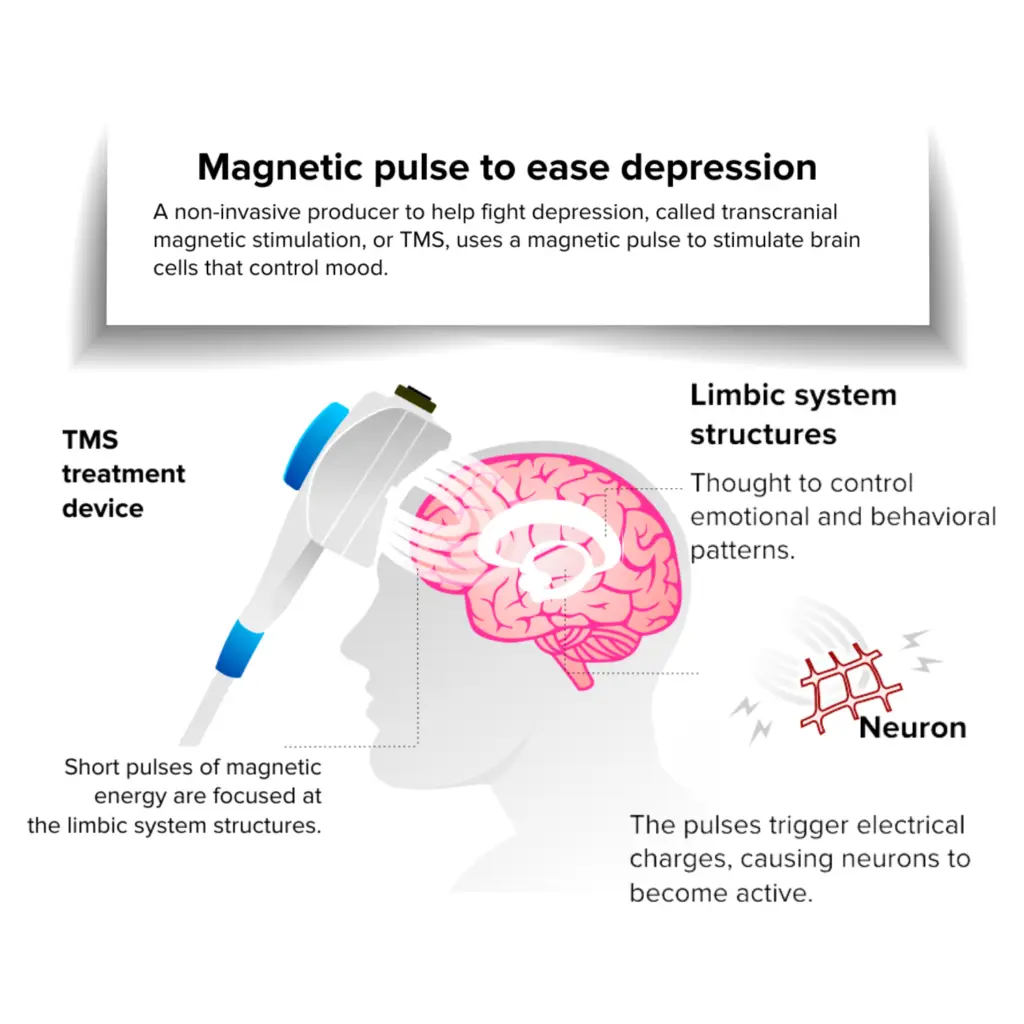
TMS delivers focused magnetic pulses through a small coil placed against the scalp. These pulses activate specific brain regions associated with emotional and cognitive functioning:
- For Depression: Stimulation is typically directed at the left dorsolateral prefrontal cortex (DLPFC), an area often underactive in individuals with depression.
- For OCD: Treatment targets the anterior cingulate cortex (ACC) and medial prefrontal cortex (mPFC), which play key roles in intrusive thoughts and compulsive behaviors.
- For PTSD: Treatment targets the dorsolateral prefrontal cortex (DLPFC) and interconnected limbic regions, which are involved in emotional regulation, fear processing, and trauma-related responses.
- For Anxiety: Treatment targets the dorsolateral prefrontal cortex (DLPFC) and medial prefrontal cortex (mPFC), which help regulate worry, stress response, and emotional control.
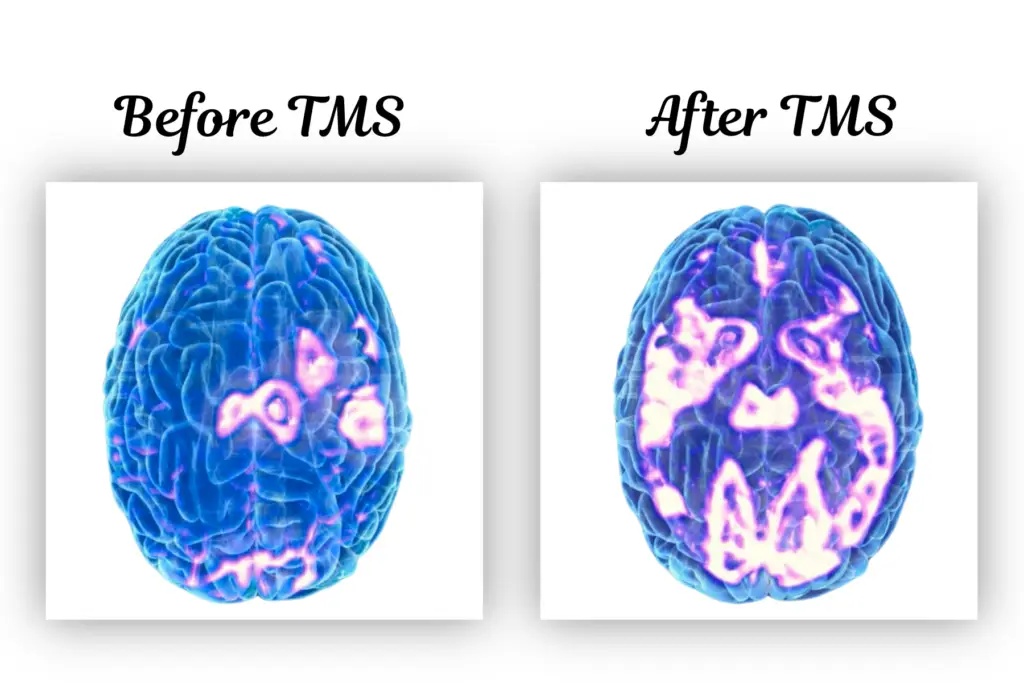
Over time, TMS helps normalize brain activity, leading to improved mood, focus, and emotional balance.
What to Expect During Treatment
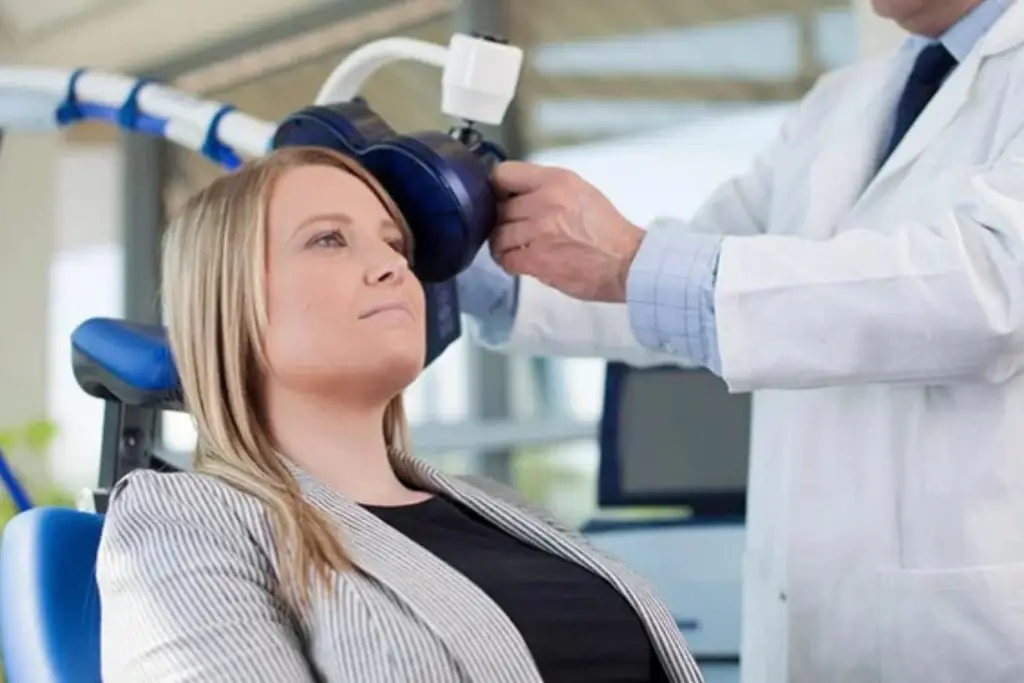
TMS is performed in-office and does not require anesthesia or sedation.
- Treatment course: Usually 5 sessions per week for 4–6 weeks (approximately 30–36 sessions).
- Session length: About 3–18 minutes per visit.
- Initial visit: Includes precise mapping and motor threshold testing to personalize treatment.
- Ongoing sessions: Follow the same settings for consistent and effective therapy
Patients remain awake and alert and can return to normal activities immediately after each session.
Effectiveness
TMS is clinically proven to significantly reduce symptoms of depression and OCD, particularly in individuals who have not responded well to medications or therapy.
Patients with depression often experience improvements in:
- Mood
- Motivation
- Concentration
Patients with OCD frequently report:
- Fewer intrusive thoughts
- Reduced compulsive behaviors
Some individuals begin noticing improvements within 2–4 weeks of starting treatment.
Possible Side Effects
TMS is generally very well tolerated. Most side effects are mild and temporary and may include:
- Scalp discomfort or mild headache
- Facial muscle twitching during treatment
- Lightheadedness (rare)
Serious side effects, such as seizures, are extremely rare (less than 0.1%).
Who May Benefit From TMS?
TMS may be a good option for individuals who:
- Have Major Depressive Disorder (MDD) or Obsessive-Compulsive Disorder (OCD)
- Have not found adequate relief from medications or talk therapy
- Prefer a non-drug, non-invasive treatment approach
- Are seeking additional support alongside current treatment