If you have been living with depression and feel like you have exhausted every option available to you — different medications, different dosages, different combinations — you are not alone. Treatment-resistant depression affects millions of Americans every year, leaving many people wondering if they will ever find something that truly works. The answer, for a growing number of patients, has been Transcranial Magnetic Stimulation — more commonly known as TMS therapy.
At Psych Pointe Texas, we offer TMS as a safe, clinically proven, and FDA-approved treatment option for patients who are ready to explore a new path forward. In this post, we will walk you through exactly what TMS is, how it works, who it is designed for, what the treatment process looks like, and how to know if it might be the right fit for your situation.
Understanding Depression on a Biological Level
To understand why TMS works, it helps to first understand what is happening in the brain during depression. Depression is not simply a matter of thinking negatively or lacking willpower. It is a complex neurological condition that affects the way certain regions of the brain function and communicate with each other.
Research has consistently shown that in people with depression, the prefrontal cortex — the area of the brain responsible for regulating mood, decision-making, and emotional responses — tends to show reduced activity. In other words, the circuits in the brain that are supposed to help you feel motivated, connected, and emotionally balanced are not firing the way they should.
Antidepressant medications attempt to address this by altering the levels of neurotransmitters like serotonin and dopamine in the brain. For many people, this approach works well. But for others, medications either do not provide adequate relief or cause side effects that make them difficult to tolerate long-term. This is where TMS offers a genuinely different solution.
What Exactly is TMS Therapy?
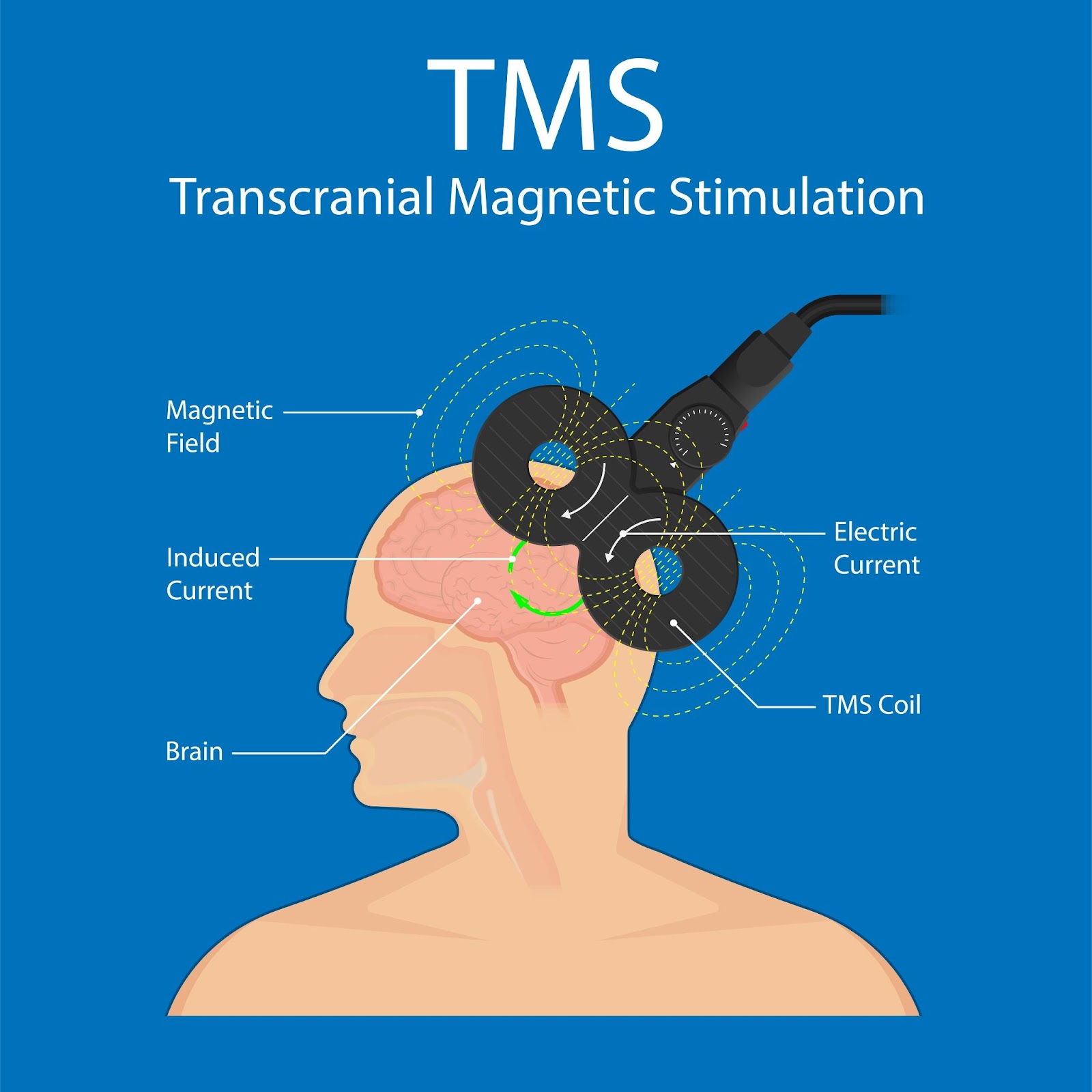
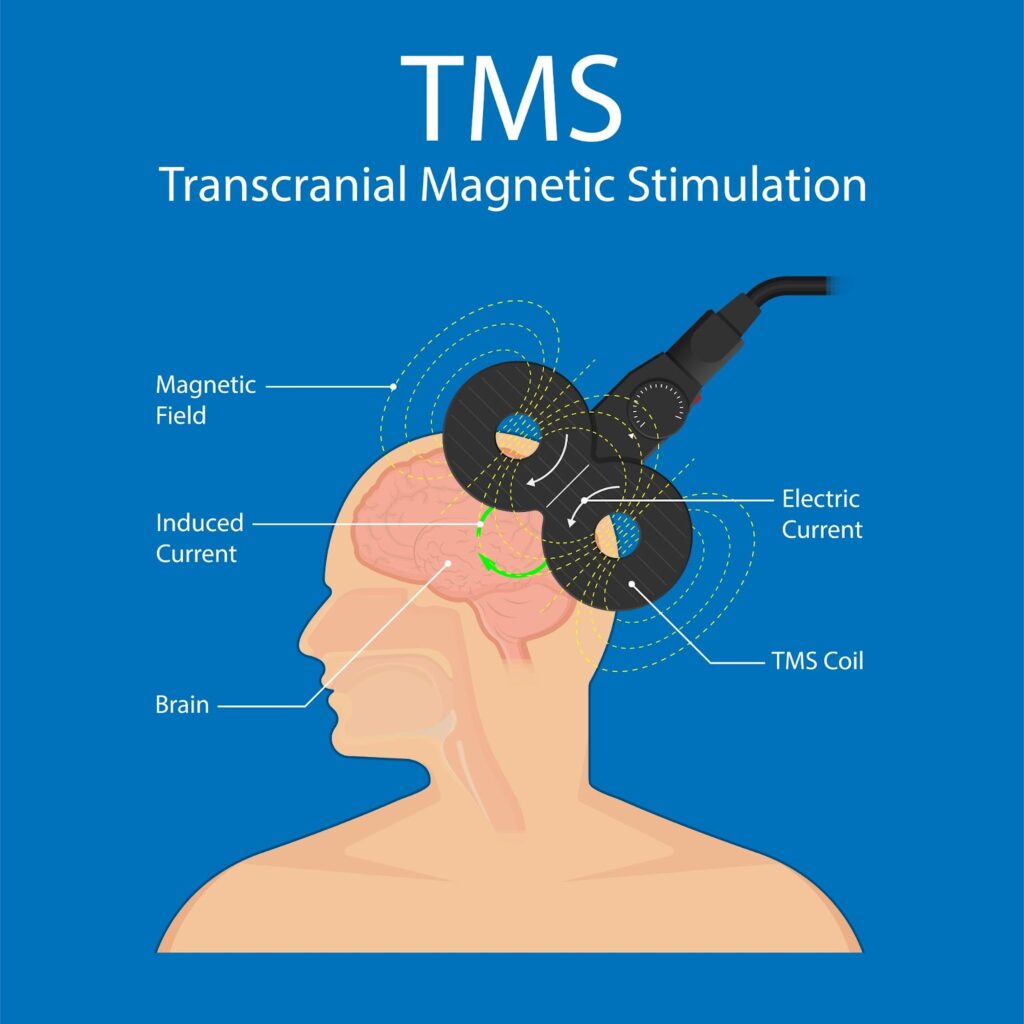
Transcranial Magnetic Stimulation is a non-invasive, outpatient brain stimulation treatment that uses precisely targeted magnetic pulses to stimulate the underactive regions of the brain associated with mood regulation. The magnetic field generated by the TMS device is similar in strength to that used in an MRI machine — it is well-studied, well-understood, and considered extremely safe.
Unlike electroconvulsive therapy, which many people are familiar with from older representations in media, TMS does not require anesthesia, sedation, or any kind of surgical procedure. There is no electricity passing through the brain. Patients remain fully awake and alert during their entire session and are able to drive themselves home and return to their daily activities immediately afterward.
The procedure involves placing a small electromagnetic coil against the patient’s scalp, near the area of the brain being targeted. The device then delivers short magnetic pulses at regular intervals, which stimulate nerve cells in that region and gradually help restore more normal patterns of brain activity over the course of treatment.
Who is TMS Therapy Right For?
TMS therapy is specifically designed for adults who have been diagnosed with major depressive disorder and who have not experienced adequate relief from antidepressant medications. The FDA approved TMS for this use in 2008, and since then, the evidence base supporting its effectiveness has continued to grow significantly.
You may be a good candidate for TMS at Psych Pointe if you meet one or more of the following criteria. You have been diagnosed with major depressive disorder. You have tried at least two different antidepressant medications at therapeutic doses without experiencing sufficient improvement. You have experienced side effects from antidepressants that have made it difficult or impossible to continue taking them. You prefer a non-medication approach to treating your depression for personal, medical, or lifestyle reasons. You are looking for a treatment that can be administered on an outpatient basis without disrupting your daily schedule.
TMS is not recommended for everyone. Patients with certain metal implants in or near the head, those with a history of seizures, or pregnant women may not be eligible for TMS. A thorough evaluation at Psych Pointe will determine whether TMS is safe and appropriate for your specific situation.
What Does the TMS Treatment Process Look Like?
One of the most common questions patients have about TMS is what the actual treatment experience feels like day to day. The good news is that it is far simpler and more comfortable than most people expect.
A standard TMS treatment course at Psych Pointe consists of five sessions per week, delivered Monday through Friday, over a period of four to six weeks — totaling approximately twenty to thirty sessions. Each individual session lasts between twenty and forty minutes, making it easy to fit into a lunch break or between other commitments.
During each session, you will sit in a comfortable chair. A trained member of our clinical team will position the TMS device against your scalp. When the treatment begins, you will likely hear a series of clicking sounds and feel a light tapping or knocking sensation on the surface of your head. This sensation is normal and expected. Most patients describe it as mildly uncomfortable at first but very tolerable, and any initial sensitivity typically diminishes significantly after the first few sessions as you become accustomed to the feeling.
You will remain awake and conscious throughout the entire session. Many patients read, listen to music, or simply relax while their treatment is administered. When the session ends, you are free to leave immediately — no recovery time, no grogginess, no restrictions on driving or normal activities.
How Effective is TMS for Depression?
The results speak for themselves. Multiple large-scale clinical trials and real-world studies have demonstrated that TMS is a genuinely effective treatment for patients with treatment-resistant depression. Approximately fifty to sixty percent of patients who undergo TMS therapy experience a significant and meaningful reduction in depressive symptoms. Among those responders, roughly one in three achieve what clinicians define as full remission — meaning their symptoms resolve almost entirely.
These are remarkable numbers, particularly for a patient population that has already tried and not responded to medications. Many patients begin to notice meaningful improvements in their mood, energy levels, motivation, and overall quality of life within the first two to four weeks of treatment, with results continuing to improve through the completion of the full course.
It is also worth noting that TMS does not simply mask symptoms the way some medications can. By stimulating and gradually retraining the neural pathways involved in mood regulation, TMS aims to produce changes in brain function that can be durable and long-lasting. Many patients who respond well to TMS maintain their improvement for a year or more after completing treatment, and maintenance sessions are available if needed down the line.
Side Effects and Safety
TMS has an excellent safety profile compared to many other treatment options for depression. The most commonly reported side effects are mild and temporary, including headache, scalp discomfort or sensitivity at the treatment site, and slight lightheadedness immediately following a session. These effects typically improve on their own within the first week or two of treatment as your body adjusts.
Unlike antidepressant medications, TMS does not cause weight gain, sexual dysfunction, sleep disturbances, or gastrointestinal side effects. Unlike ECT, TMS carries no risk of memory loss or cognitive impairment. The most serious potential risk associated with TMS is a very small risk of seizure, estimated at less than one in one thousand patients — and this risk is carefully managed through thorough screening before treatment begins.
Does Insurance Cover TMS Therapy?
Many major insurance plans, including Medicare and a growing number of Medicaid programs, now cover TMS therapy for patients who meet specific clinical criteria. The standard requirement is a confirmed diagnosis of major depressive disorder and documented evidence that at least two antidepressant medications have been tried and failed to provide adequate relief.
At Psych Pointe Texas, our team handles the insurance verification and prior authorization process on your behalf. We will contact your insurance provider, confirm your benefits, and explain exactly what is covered before you begin treatment — so there are no surprises, and you can focus entirely on your recovery.
TMS vs. Other Treatment Options
Patients often ask how TMS compares to other treatment options they may have heard about — particularly Spravato® (esketamine) and medication. Each of these treatments works through a different mechanism and is suited to different patient profiles.
Medication is typically the first-line treatment for depression and works well for many people. Spravato® is a nasal spray treatment approved specifically for treatment-resistant depression that works by targeting the brain’s glutamate system and produces rapid relief — often within hours or days. TMS works more gradually over weeks but produces changes in brain function that can be longer-lasting and avoids the systemic side effects associated with medications.
At Psych Pointe, we evaluate each patient individually and present all available options clearly so that you can make an informed, confident decision about your care together with your provider.
Taking the Next Step
Living with treatment-resistant depression can feel isolating and exhausting. If you have tried other approaches and still haven’t found the relief you deserve, TMS therapy at Psych Pointe Texas may be the turning point you have been waiting for.
Our experienced, compassionate clinical team is here to answer every question you have, walk you through the evaluation process, and support you every single step of the way. You do not have to keep searching alone.
Book your TMS consultation at Psych Pointe Texas today. Relief is possible — and we are here to help you find it.